
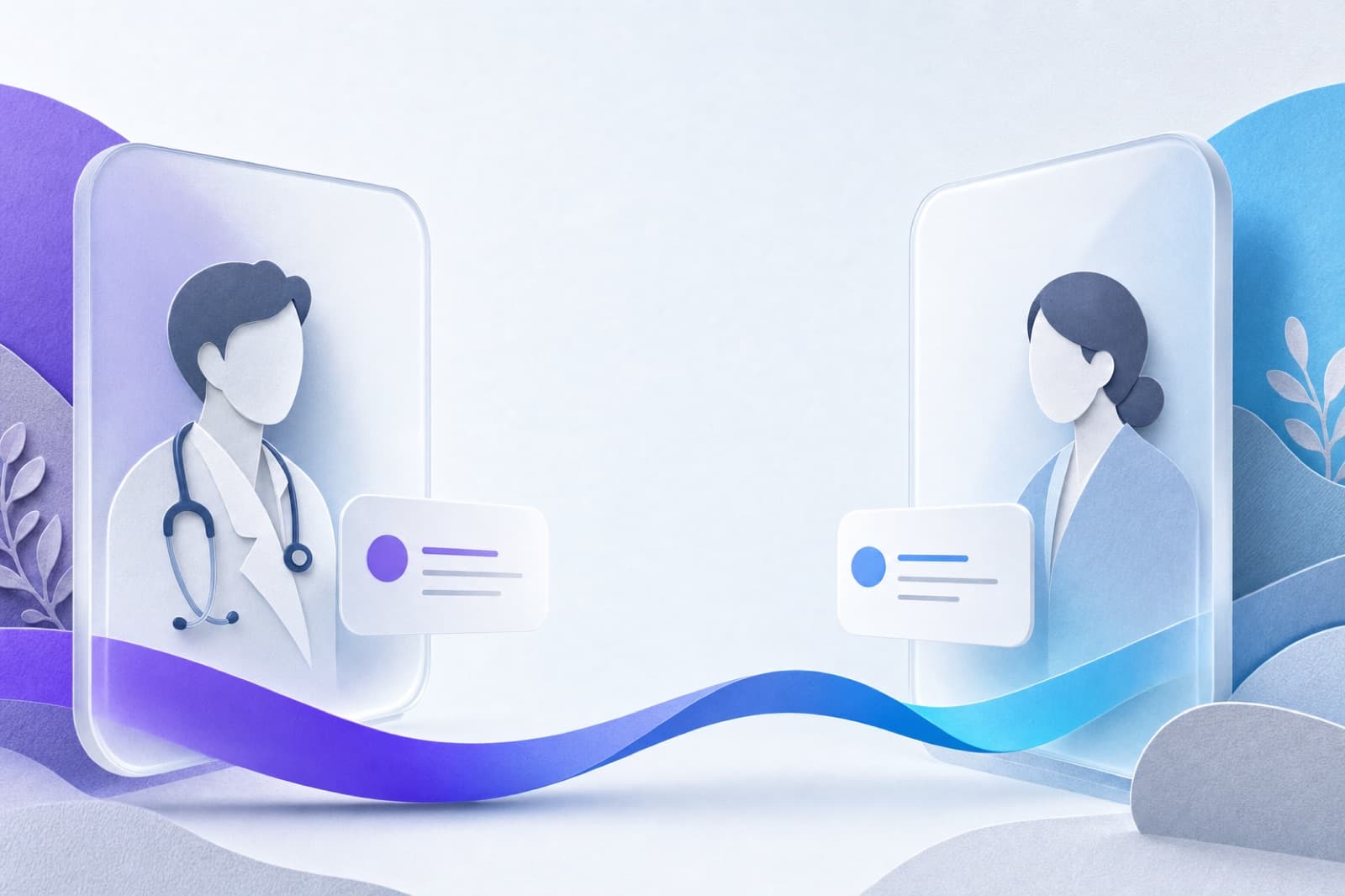
Telemedicine platform for medical practicesVirtual visits,
without the friction.
Video, VOIP, scheduling, and billing — one platform, not four vendors stitched together.
Built for the visit, end to end.
Every part of a virtual encounter — from scheduling and reminders to documentation and billing — lives on the same platform.
HD video consultations
Crisp video for remote examinations and patient conversations — without app downloads or workarounds.
Integrated VOIP
Built-in voice for follow-up calls, callbacks, and audio-only visits when video isn’t the right modality.
Smart scheduling
Flexible appointment management with automated reminders that lower no-show rates.
Automated billing
Visit codes generated from the encounter — passed directly to our billing pipeline.
A clean path, visit to payment.
Schedule the visit
Patients book directly or are scheduled by your team. Reminders go out by email and SMS automatically.
Connect securely
One-click join over HIPAA-compliant video. VOIP fallback when video conditions aren’t ideal.
Document the encounter
Notes and codes are captured during the visit and synced to your EHR.
Bill the visit
Encounter data flows into our billing service for submission and tracking.
Everything the visit needs to work.
Communication, scheduling, documentation, and billing in one HIPAA-compliant platform — designed so you don’t notice it.
What ships with the platform
- HD video & audio consultations
- Secure VOIP communications
- Automated billing integration
- Smart appointment scheduling
- EHR integration
- HIPAA-compliant infrastructure
What changes when the stack is unified.
Most telemedicine setups have video over here, scheduling over there, and billing handed to a third vendor. Unifying the stack quietly removes a category of operational problems.
- Patient accessibility for rural and homebound patients
- Lower no-show rates with automated reminders
- Documentation captured in the encounter
- Billing handed off cleanly to revenue cycle
- Practice efficiency without losing visit time
- Secure communications that meet HIPAA
Four things that just work
Scheduling
Patient self-book, staff schedule, automated reminders.
Visit
Browser-based HD video with VOIP fallback when needed.
Documentation
Notes captured during the encounter, synced to your EHR.
Billing
Visit codes generated and handed to revenue cycle.
Built around what your practice already runs.
The EHR you already use
Monitoring data belongs in the chart your clinicians already open, not in a second portal. These connections are built and maintained in-house, and the list is not closed.
In development: Athenahealth, Epic.
The specialty you practice in
What is worth monitoring, and what should trigger a call, differs by panel. Each specialty page names the measures, the escalation question, and the codes that commonly apply.
Telemedicine questions, answered plainly.
Are Medicare telehealth flexibilities still in effect in 2026?
Yes. Congress extended the major telehealth flexibilities through December 31, 2027 — including the patient's home as an originating site, no geographic restrictions, audio-only visits where clinically appropriate, and expanded practitioner types. Practices can plan telemedicine programs on that footing through at least 2027.
Is the Neuvora telemedicine platform HIPAA compliant?
Yes. Video visits, messaging, and patient data all run through HIPAA-compliant, encrypted infrastructure, and the platform follows HL7 standards for clinical data exchange.
Does the platform integrate with our EHR?
Neuvora integrates live with Tebra, PrognoCIS, eClinicalWorks, and AdvancedMD, with Athenahealth, Epic, and Cerner on the roadmap. Visit documentation and charges flow to your existing system rather than a separate silo.
Can telemedicine visits be billed automatically?
The platform captures visit type, duration, and documentation as you work and generates the corresponding charges, which Neuvora's billing service can submit and track end to end.
Do virtual visits work alongside remote monitoring programs?
Yes — that is the intended model. Monitoring data from RPM or RTM surfaces in the same platform where visits happen, so a concerning reading can turn into a scheduled virtual visit without switching systems.
One platform for every virtual visit.
A short call is the fastest way to see how it would fit your practice workflow.